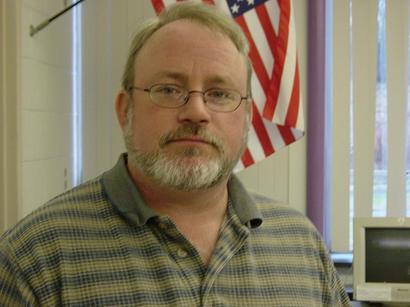
I have made it to Luhansk safely and soundly with no problems. This year’s logistics were made incredibly difficult due to the grounding of much of the domestic air fleet in Ukraine, so some alternative plans had to be found…
This year, I flew though Amsterdam on Northwest Airlines. Northwest is partnered with Air France and Royal Dutch Airlines, but luckily the association with Air France has not adversely affected it. For some reason, I was not able to check in all the way through to Kiev, but would have to do so once again in Amsterdam, which was a bit of a concern. I think it had something to do with the odd security arrangements in the Amsterdam airport; when we got out of the plane, we were just “dumped” in an unsecured terminal.
It took about a half hour to secure a boarding pass at the transfer desk, but the departure terminal was not ridiculously far away, so I made it with about twenty minutes to spare. Security was pretty simple- it seems that each gate has its own checkpoint, so it went pretty quickly.
We flew to Kiev in a Boeing 737, which was like flying in an old friend after the cramped and crowded 757 I took from Boston. On that flight there were three of us in our row, and none of us was particularly petite, so we were packed in like sardines. The flight to Kiev on the other hand was pretty spacious- I shared a row for three with a Ukrainian physicist teaching at UC Sacramento. She was a little nervous about flying, but was good conversation.
The baggage did show up in Kiev, but I believe mine was the last off the plane, so I was getting pretty nervous. I couldn’t find a luggage cart, so I was forced to deal with my two suitcases, carry on, and backpack on my own. Luckily the driver from the Hotel Lybid spotted me pretty quickly and helped me navigate past the land sharks that are Kiev taxi drivers.
Getting to the hotel took quite a long lime. Kiev is a massive and spread out city. My driver spoke passable English and pointed out the sites along the way, including the square where the Orange Revolution took place, the Parliament building, and Prime Minister’s office. There were also several old churches and a monastery. On top of the hill that Kiev surrounds is the “Iron Lady” a huge statue to memorialize the suffering of Ukrainians under the Nazis.
The Hotel Lybid was a built in Soviet times, but renovated recently and seems to cater to the growing tourist and international business industries. The “standard” room was quite small, but comfortable. The beds were very narrow, but comfortable. The TV even had the BBC world service so I could catch up on some news. The best part of the room was the view. My room was on the 15th floor overlooking a square with a beautiful monument to WWII veterans and the local circus building.
I tried to do a little exploring around the hotel, but unlike Luhansk, where the streets are on a grid pattern, Kiev’s streets go every which way. After an unsuccessful attempt to find an international phone card, I simply gave up and went back to the hotel for dinner. I did get a free pair of jeans for stopping by a cell phone kiosk. The worker told me it was a gift from the people of Kiev. I hope they will fit my son, because there is no way I will ever be able to stuff myself into them.
Coming bask to the hotel, I found Mike with my train ticket to Luhansk. Mike is Olena’s (my Luhansk contact) brother. After explaining the train schedule, he made arrangements to have his wife Tatiana show me around the city the next day. After dinner and a well needed shower, I slept like the dead.
I woke up at 8am. Tatiana was to meet me at 11:30, so I walked around the square, had a good breakfast, and secured rooms for my return trip. Tatiana found me and we took a whirlwind tour of the city. We stopped by St. Michael’s (?) church which is about 900 years old. The icon and fresco work were breathtaking. I was allowed to take some pictures, but had to pay 3hr to do so.
From there, we walked to the Golden Gate which is a reconstruction of the ruins of the old city walls. I was struck by the shear mass of the thing. Much of the exterior masonry work is modern, although the internal work is from the 11th century. There are several levels which if you are willing to walk up the steps to the top offer a fantastic view.
Tatiana and I then went on a search for an international phone center so I could call home. We found one near Independence Square and also found some phone cards for future use. Since we still had a few hours, we went to a 12th century monastery.
The monastery is a massive complex, built on the side of the hill. Once inside the gates, the interior is dominated by a church and bell tower. The church was just as beautiful as St. Michael’s, but no pictures were allowed. Of special interest to me was a book museum with looked at the history of printing in the monastery and Kiev, covering everything from illuminated manuscripts to the most modern children’s popup book.
After a quick meal at a Ukrainian cafeteria, Tatiana and I went back to the Lybid to meet Mike, collect my stored luggage, and get to the train station. Mike organized a taxi, so we hauled all my stuff into the van and took off. The driver informed us that it can take up to an hour to get to the train station, even though it is only a 5-10 minute walk. That made me nervous as we had forty minutes to get there, find the track and get my luggage on board.
Luckily the traffic gods were with us and we got there in about 10 minutes, but the scene that unfolded before is at the station defies description (but I’ll try anyway). The building is huge, and was completely surrounded by taxi cabs, cars, and busses, about 10 deep, just dropping people off anywhere and everywhere. Somehow the driver managed to get us up close, so we literally jumped out and grabbed the luggage so the next car could get through. Once inside the station, the chaos continued, but everything was so well laid out and marked, that it was a breeze to get to the train, which we did with 10 minutes to spare.
Mike and Tatiana helped get me situated in my compartment, which I would share with some woman who spoke no English. After saying my goodbyes, I settled in at a window in the corridor, and watched the scenery go by. I have never been on a long distance train ride before do I was not really sure of what goes on. After about an hour a woman came by with beer, so I bought a warm liter of Stella. Once it was too dark to see anything, I settled into my bunk and read Peter Kropotkin’s Conquest of Bread, part of AK Press’s Working Classics Series (a review will be forthcoming).I dozed off around 10pm, but woke up at 1 and could not fall back to sleep. Part of the problem was that we could not figure out how to turn off the light over the bunks.
After tossing fitfully until 6am, I did manage to fall back to sleep for a few hours. The rest of the ride into Luhansk was uneventful and Olena and Irina found me right away. Before going to the hotel, we stopped by the travel agency to get a plane ticket from Doneskt to Kiev for the return trip.
A lot has changed in the last year. The theater building that has been under construction for years is just about done, as are the University’s new business center and two new office blocks on Defense Street. Sadly, the University Café where I took my meals for the last two years is closed for the summer, so I will be eating at the hotel, which apparently has always had a dining room. The food is very good there and the portions are huge, far more than I can hope to eat. I did happen to bump into the Galina, who used to run the café, but now works down the street. It was nice to see her, when I was sick my first year, she worked very hard to get the right food into me.
I hope to have a better update later on the city as a whole, pretty soon, so stay tuned.
Wednesday, July 09, 2008
Wednesday, July 02, 2008
On the Road Again

I will be hitting the road again tonight for Luhansk for a third round of Franklin Pierce's Summer Language Institute. It will be a long trip this time around, but I'll get a good view of the country.
Sunday, May 04, 2008
Nowtopia
What is the nature of work and class in this postmodern age? That is the fundamental question Chris Carlsson asks in his latest book, Nowtopia: How Pirate Programmers, Outlaw Bicyclists, and Vacant-Lot Gardeners are Inventing the Future Today! Carlsson’s analysis of the way ordinary men and women challenge selected aspects of the commercialism of life and the atomization of the “classical” working class is both insightful and will lead to further theoretical investigation of what a reconstituted working class will eventually look like.
Carlsson begins his book on a discussion of how we define work. Is it just the paid work we do? Or is it the ways in which people come together to make their goals happen? Carlsson understands that the ordinary worker (and if we draw a paycheck, we are, after all workers) cannot completely separate themselves from the logic of the capitalist economic system. We need to be able to pay the rent and provide for the other necessities/niceties of life. During the time we work, we are at the mercy of the system. It is how workers organize the free time that becomes meaningful in his analysis.
The late capitalist system in which we live has become quite adept at colonizing the free time of the workers in the system, especially those workers who identify themselves as the middle/professional class. The extra hours, the working vacations, the work done at home are all part of a system that expects more from people while giving them less of what workers have traditionally worked for- security, money, and free time.
Nowtopia focuses on how some segments of our society are trying to reclaim their “free time” and rebuild communities. The gardeners, bikers, and programmers that Carlsson features in the book have these two things in common. The creation of a community that is not profit based becomes a type of work, but a work that is not defined by the capitalist system.
Carlsson’s analysis is excellent and he understands completely that pervasiveness of the capitalist system and its ability to colonize even the activities of these emerging communities. The rent, after all, needs to be paid in cash, not garden grown tomatoes.
Carlsson begins his book on a discussion of how we define work. Is it just the paid work we do? Or is it the ways in which people come together to make their goals happen? Carlsson understands that the ordinary worker (and if we draw a paycheck, we are, after all workers) cannot completely separate themselves from the logic of the capitalist economic system. We need to be able to pay the rent and provide for the other necessities/niceties of life. During the time we work, we are at the mercy of the system. It is how workers organize the free time that becomes meaningful in his analysis.
The late capitalist system in which we live has become quite adept at colonizing the free time of the workers in the system, especially those workers who identify themselves as the middle/professional class. The extra hours, the working vacations, the work done at home are all part of a system that expects more from people while giving them less of what workers have traditionally worked for- security, money, and free time.
Nowtopia focuses on how some segments of our society are trying to reclaim their “free time” and rebuild communities. The gardeners, bikers, and programmers that Carlsson features in the book have these two things in common. The creation of a community that is not profit based becomes a type of work, but a work that is not defined by the capitalist system.
Carlsson’s analysis is excellent and he understands completely that pervasiveness of the capitalist system and its ability to colonize even the activities of these emerging communities. The rent, after all, needs to be paid in cash, not garden grown tomatoes.
Monday, April 14, 2008
D.M. James Parsons, Oct. 25, 1966-Mar. 13, 2008
For my brother, Jim Parsons
Catullus 101
Tr. William Parsons
Carried through many lands and many seas,
I have come, brother, to this sad grave
so I may give to you the final offices of the dead
and to speak in vain to your voiceless ashes.
Alas, since Fortune has unfairly taken
you away from me,
now accept, under these circumstances,
these sad gifts, the ancient custom of our parents,
flowing with brotherly tears,
and now and forever, hale and farewell.
Catullus 101
Tr. William Parsons
Carried through many lands and many seas,
I have come, brother, to this sad grave
so I may give to you the final offices of the dead
and to speak in vain to your voiceless ashes.
Alas, since Fortune has unfairly taken
you away from me,
now accept, under these circumstances,
these sad gifts, the ancient custom of our parents,
flowing with brotherly tears,
and now and forever, hale and farewell.
Sunday, November 25, 2007
Sunday Salon, November 25, 2007
The Archimedes Codex
Reviel Netz & William Noel
The Archimedes Codex is the story of the conservation and study of a palimpsest. For the general reader, this is probably not the most enthralling premise for a book. For a book person, especially one who cares about ancient literature, it is a bombshell. What the authors of this book and their team have done is re-present several lost texts of the Greek polymath Archimedes and orator Hyperides to the world.
The “ugly” little prayer book which contains these extraordinary texts is a palimpsest. A palimpsest is a parchment book that has been scraped (erased) and reused. In 1229, a monk/scribe named Ioannes Myronas reused the parchment from several manuscripts to copy out the prayer book. Since then the book survived wars, the elements, and neglect to end up in the hands of a private collector who wisely turned it over the Walter Art Gallery in Baltimore for conservation and scholarly attention.
Natz, a Stanford classicist interested in ancient science, and Noel, the curator of manuscripts at the Walters, trade chapters, each explaining the part of the project that they are most familiar with. I would like to look at each author’s contribution separately.
Natz’s description of the significance of Archimedes’ math is very helpful, especially for the non-specialist. What is significant about the findings in the codex is how advanced Archimedes was; he was anticipating the work of Newton and Galileo by almost 2,000 years. Scholars knew Archimedes was an inspiration to the later physicists, but did not understand the true extent of his contribution. Much of his work was lost by the time of Newton. What the codex is showing scholars is a fuller picture of just what Archimedes was capable of. Infinity and probability, two of the most surprising issues that Archimedes tackles in the palimpsested leaves of the codex would elude scholars for hundreds if not thousands of years. One has to question what would have happened to the history of science if Archimedes was widely read in his own day or not ignored in medieval times.
The project to conserve and study the codex was the overall responsibility of Noel. The Walters has an impressive manuscript collection which I have visited several times over the years. Certainly the eye is drawn to the beautifully illuminated examples that grace the collection. The codex is aesthetically “ugly” to use Noel’s words, but significant for the information hidden in its pages. Noel takes the reader through the process of acquisition, conservation, and imaging the codex that will allow it to be read by scholars today and preserve it for future generations. Noel’s explanation of the various imaging techniques is invaluable for the layman.
What is especially fascinating in Noel’s account is the reconstruction of the codex’ providence. There was a real question about the legality of the sale of the manuscript. The Greek Orthodox Patriarchate of Istanbul claimed that the book was stolen, and there is evidence that they did indeed own it at some point. The mechanism of transfer from a religious institution in Istanbul to a private collection in Paris is not satisfactorily explained, perhaps because such an explanation is now impossible. The role of the book dealer Dikran Kelekian, who was supposed to have been involved with the book in Paris in 1931, needs further investigation or explanation at the very least, as does the role of Marie Louis Sirieix; how did he end up with the manuscript from Istanbul?
The Archimedes Codex is a fascinating read. While the book is written for the layman, I believe there is something for the scholar as well. The mathematics of Archimedes is explained in simple language as is the advanced technology used to pull the text from the pages. And what a text it is! Ever since reading Luciano Ganfora’s The Vanished Library, as a young undergraduate, I have been fascinated by what western civilization has lost of its intellectual heritage. Netz and Noel have closed that gap just a little for us and I, for one, am eternally grateful.
Reviel Netz & William Noel
The Archimedes Codex is the story of the conservation and study of a palimpsest. For the general reader, this is probably not the most enthralling premise for a book. For a book person, especially one who cares about ancient literature, it is a bombshell. What the authors of this book and their team have done is re-present several lost texts of the Greek polymath Archimedes and orator Hyperides to the world.
The “ugly” little prayer book which contains these extraordinary texts is a palimpsest. A palimpsest is a parchment book that has been scraped (erased) and reused. In 1229, a monk/scribe named Ioannes Myronas reused the parchment from several manuscripts to copy out the prayer book. Since then the book survived wars, the elements, and neglect to end up in the hands of a private collector who wisely turned it over the Walter Art Gallery in Baltimore for conservation and scholarly attention.
Natz, a Stanford classicist interested in ancient science, and Noel, the curator of manuscripts at the Walters, trade chapters, each explaining the part of the project that they are most familiar with. I would like to look at each author’s contribution separately.
Natz’s description of the significance of Archimedes’ math is very helpful, especially for the non-specialist. What is significant about the findings in the codex is how advanced Archimedes was; he was anticipating the work of Newton and Galileo by almost 2,000 years. Scholars knew Archimedes was an inspiration to the later physicists, but did not understand the true extent of his contribution. Much of his work was lost by the time of Newton. What the codex is showing scholars is a fuller picture of just what Archimedes was capable of. Infinity and probability, two of the most surprising issues that Archimedes tackles in the palimpsested leaves of the codex would elude scholars for hundreds if not thousands of years. One has to question what would have happened to the history of science if Archimedes was widely read in his own day or not ignored in medieval times.
The project to conserve and study the codex was the overall responsibility of Noel. The Walters has an impressive manuscript collection which I have visited several times over the years. Certainly the eye is drawn to the beautifully illuminated examples that grace the collection. The codex is aesthetically “ugly” to use Noel’s words, but significant for the information hidden in its pages. Noel takes the reader through the process of acquisition, conservation, and imaging the codex that will allow it to be read by scholars today and preserve it for future generations. Noel’s explanation of the various imaging techniques is invaluable for the layman.
What is especially fascinating in Noel’s account is the reconstruction of the codex’ providence. There was a real question about the legality of the sale of the manuscript. The Greek Orthodox Patriarchate of Istanbul claimed that the book was stolen, and there is evidence that they did indeed own it at some point. The mechanism of transfer from a religious institution in Istanbul to a private collection in Paris is not satisfactorily explained, perhaps because such an explanation is now impossible. The role of the book dealer Dikran Kelekian, who was supposed to have been involved with the book in Paris in 1931, needs further investigation or explanation at the very least, as does the role of Marie Louis Sirieix; how did he end up with the manuscript from Istanbul?
The Archimedes Codex is a fascinating read. While the book is written for the layman, I believe there is something for the scholar as well. The mathematics of Archimedes is explained in simple language as is the advanced technology used to pull the text from the pages. And what a text it is! Ever since reading Luciano Ganfora’s The Vanished Library, as a young undergraduate, I have been fascinated by what western civilization has lost of its intellectual heritage. Netz and Noel have closed that gap just a little for us and I, for one, am eternally grateful.
Sunday, November 18, 2007
Sunday Salon, November 18, 2007
The Mysterious Flame of Queen Loana
Umberto Eco
The Mysterious Flame of Queen Loana is the latest novel by the Italian semiotician and essayist Umberto Eco. Whenever confronted by a new work of fiction by Eco, you can count on two things-- an erudite discussion on some aspect of culture and history and a storyline that that will leave you riveted.
The plot of the book is deceptively simple. Yambo, and elderly book dealer awakes from a post-stroke coma to realize that he remembers nothing of his life-his past, his family, and his passions—but can remember every line of every book he has read. Yambo, with the help of his wife, beautiful and smart assistant, best friend, and the woman who cares for his ancestral house, tries to untangle the mystery of his life by looking at the books he has read and then relating them to the anecdotes the others tell him of his life.
What Eco presents in this novel is a discussion on the meaning of identity. As a book person, I know how personal my choices of reading have been. So much of life, especially for someone whose stock and trade are books and words, is tied to what we have read. But that picture is incomplete. We are more than what our intellects devour; to those books are alloyed the people and the tangle of emotions that populate the world outside our reading chairs.
As Yambo searches his books for some clue to his past, he discovers his childhood involvement in the resistance to the fascists, his relationship to his grandfather, and most importantly, his Dante-like idealized love of the girl, Lila. What bothers him most about his condition is that while he can reconstruct the events of his life and even his love of Lila, he cannot see her face.
In the end, Yambo succumbs to another stroke after finding the one book that is the Holy Grail of antiquarian book lovers, a First Folio of Shakespeare. The episode triggers further latent memories, but the one that most eludes him, Lila’s face, is denied. Whether the ending of the Name of the Rose, Eco’s first novel, was intentionally inverted, I suppose is up to debate. Adso of Melk, the narrator of that novel loses a library, but retains his memory.
Who we are and what is important to us in our personal lives is more important than who we are in our intellectual lives. Hopefully, we didn’t need Eco to remind us of that. That being said, however, Eco does make us examine the relationship between the two. Eco’s novels are filled with literate people, living literate lives. In this, The Mysterious Flame is nothing new. But the human quest of deciphering one’s own past is a quest we must all confront at some point in our lives. Doing so through our libraries must prove inadequate.
Umberto Eco
The Mysterious Flame of Queen Loana is the latest novel by the Italian semiotician and essayist Umberto Eco. Whenever confronted by a new work of fiction by Eco, you can count on two things-- an erudite discussion on some aspect of culture and history and a storyline that that will leave you riveted.
The plot of the book is deceptively simple. Yambo, and elderly book dealer awakes from a post-stroke coma to realize that he remembers nothing of his life-his past, his family, and his passions—but can remember every line of every book he has read. Yambo, with the help of his wife, beautiful and smart assistant, best friend, and the woman who cares for his ancestral house, tries to untangle the mystery of his life by looking at the books he has read and then relating them to the anecdotes the others tell him of his life.
What Eco presents in this novel is a discussion on the meaning of identity. As a book person, I know how personal my choices of reading have been. So much of life, especially for someone whose stock and trade are books and words, is tied to what we have read. But that picture is incomplete. We are more than what our intellects devour; to those books are alloyed the people and the tangle of emotions that populate the world outside our reading chairs.
As Yambo searches his books for some clue to his past, he discovers his childhood involvement in the resistance to the fascists, his relationship to his grandfather, and most importantly, his Dante-like idealized love of the girl, Lila. What bothers him most about his condition is that while he can reconstruct the events of his life and even his love of Lila, he cannot see her face.
In the end, Yambo succumbs to another stroke after finding the one book that is the Holy Grail of antiquarian book lovers, a First Folio of Shakespeare. The episode triggers further latent memories, but the one that most eludes him, Lila’s face, is denied. Whether the ending of the Name of the Rose, Eco’s first novel, was intentionally inverted, I suppose is up to debate. Adso of Melk, the narrator of that novel loses a library, but retains his memory.
Who we are and what is important to us in our personal lives is more important than who we are in our intellectual lives. Hopefully, we didn’t need Eco to remind us of that. That being said, however, Eco does make us examine the relationship between the two. Eco’s novels are filled with literate people, living literate lives. In this, The Mysterious Flame is nothing new. But the human quest of deciphering one’s own past is a quest we must all confront at some point in our lives. Doing so through our libraries must prove inadequate.
Sunday, October 28, 2007
Sunday Salon, October 28, 2007
The Sunday Salon is an informal "reading circle" where a group of willing individuals discuss their readings. You can read more at http://dhamel.typepad.com/sundaysalon/ . I wanted to get something in for the first week, so I threw something together pretty quickly; excuse the roughness. I think this will be fun.
Osman's Dream: The History of the Ottoman Empire: Books
Caroline Finkel
Osman’s Dream is a one volume history of the Ottoman Empire. The book is a much needed antidote to the West’s Eurocentric historical view. Like many people who are not Middle East specialists, our perceptions of the Ottoman Empire are filtered through histories of their adversaries and their relationship to the West. We learned that the Ottomans were the people who finally lay to rest the rump of the Roman Empire with their conquest of Byzantine Constantinople. They were the people whose empire was itself finally defeated by WWI. Osman’s Dream demonstrates conclusively that the Ottoman Empire is worthy of our attention in its own right.
Finkel’s treatment of the Ottomans does not ignore Europe, rather it does provides a nuanced analysis of the often complicated and contradictory set of relationships between the Empire their western counterparts. The book’s major strength, however, is its detailed description of the relationships within the empire. Finkel’s periodization is natural and dictated by the political and social forces native to the Ottomans, not artificial western models.
Like any book that tries to relate 800 years of history in a relatively short book (600+ pages), there are some glosses. Especially missed was a detailed description of the relationship between the highest levels of the bureaucracy and the middle. A greater attention to the cultural achievements of the Ottomans would also have been welcome.
Osman’s Dream is a great book to introduce a non-specialist to the Ottoman Empire. With the general knowledge gained by reading this book, the interested layman could easily move on to more specialized histories or reinterpret western histories, such as Norwich’s A short History of Byzantium.
Osman's Dream: The History of the Ottoman Empire: Books
Caroline Finkel
Osman’s Dream is a one volume history of the Ottoman Empire. The book is a much needed antidote to the West’s Eurocentric historical view. Like many people who are not Middle East specialists, our perceptions of the Ottoman Empire are filtered through histories of their adversaries and their relationship to the West. We learned that the Ottomans were the people who finally lay to rest the rump of the Roman Empire with their conquest of Byzantine Constantinople. They were the people whose empire was itself finally defeated by WWI. Osman’s Dream demonstrates conclusively that the Ottoman Empire is worthy of our attention in its own right.
Finkel’s treatment of the Ottomans does not ignore Europe, rather it does provides a nuanced analysis of the often complicated and contradictory set of relationships between the Empire their western counterparts. The book’s major strength, however, is its detailed description of the relationships within the empire. Finkel’s periodization is natural and dictated by the political and social forces native to the Ottomans, not artificial western models.
Like any book that tries to relate 800 years of history in a relatively short book (600+ pages), there are some glosses. Especially missed was a detailed description of the relationship between the highest levels of the bureaucracy and the middle. A greater attention to the cultural achievements of the Ottomans would also have been welcome.
Osman’s Dream is a great book to introduce a non-specialist to the Ottoman Empire. With the general knowledge gained by reading this book, the interested layman could easily move on to more specialized histories or reinterpret western histories, such as Norwich’s A short History of Byzantium.
Friday, August 10, 2007
Rome Day 2- July 25
I ran into a guy from NY who told me that you can get a bus to the Vatican and a day pass for only €4 for unlimited rides. Sounds like a good deal and easier on the legs, so I negotiate a purchase from a little convenience store down the street from the hotel and head to the Vatican.
 I take a side trip to the Pantheon, which is stunning. It gives you a real sense of the power and technique of Roman engineering. It has been converted to a church dedicated to the Christian martyrs, so there is little of the original there. The kings Victor Emmanuel II and Umberto I are buried there. There is very little of the original building left, I believe even the marble work is not original, but the overall structure is amazing and I guess we have to thank the church for preserving it.
 I take a side trip to the Pantheon, which is stunning. It gives you a real sense of the power and technique of Roman engineering. It has been converted to a church dedicated to the Christian martyrs, so there is little of the original there. The kings Victor Emmanuel II and Umberto I are buried there. There is very little of the original building left, I believe even the marble work is not original, but the overall structure is amazing and I guess we have to thank the church for preserving it.
 Also in the Grotto is the “Tomb of St. Peter.” I believe they found the original tomb, with the body, not all that long ago. It is by far the most ornate; beautiful marble work, but covered in glass. I snuck a picture but I doubt it will come out.
The line through security had grown exponentially while I was in the Grotto, so I decided against going into St. Peter’s proper and headed to the Vatican Museum and Sistine Chapel. I had to leave Vatican City and walk around the walls to the other side of the city, which was long but worth it.
One piece of advice—Do not assume that if a sign is directing you to something in the Vatican, that you are heading in the right direction or are even reasonably close.
The Vatican Museum costs €13 to enter, but worth every penny. The art gallery was incredible. The range of the pieces and the beauty of them is really beyond description. I saw my first Di Vinci up close and personal. I was told by one guard that no photography was allowed, but another, half way through the gallery said it was OK, as long as there was no flash, so I went to town.

After the gallery, I headed toward the Sistine Chapel, which is at the end of a maze of rooms, all of which were impressive. On the way, I saw Raphael’s School of Athens up close. It is much larger than I expected and hard to take in all at once. The Chapel was everything I expected, but with a lot more people; we were jammed in shoulder to shoulder. The find of the afternoon was the Old Vatican Library, which was quite interesting, but my camera battery was low, so I was conservative with the pictures.
The bus ride back to the hotel was a disaster. I had to transfer from the 64 to the 62 bus, which took forever to show up. It took about 45 minutes to get from the Pantheon to the Hotel, by which time I was a soaking mess of sweat.
 After a few drinks at the “Friends” outdoor café, I walked to the Spanish Steps again. That night there was a protest against the arrest of some Columbian human rights workers, so I joined in. The Columbian community in Rome know how to throw a protest—white flags and opera. The mass of people made the evening. A German woman with good English from Stuttgart offered me some pizza, which was very good. After getting a drink from the fountain, I headed toward Trevi, which is a really hopping spot. The fountain was not working, but the crowds gathered nonetheless. I walked to the nearby Cuba Café for some pizza and beer. The crowds were a lot of fun to watch, so I sat there for an hour and watched them go by.
Wednesday, August 08, 2007
Rome Pics
I have uploaded a selection of day 1 pics at http://picasaweb.google.com/wgerardp/RomeDay1
Monday, August 06, 2007
July 24, 2007- Day 2
 I have found Rome to be an expensive city. One of the few places where I can cut corners is food, so finding cheap/free places to eat is a priority. Luckily breakfast is free at the hotel and unlike the frozen muffins and instant coffee you would find in many US hotel breakfasts, the Gambrinus’ breakfast is real bacon and eggs and some very decent breads and fruits.
I started wandering down the 20th of September St towards the Imperial Forums (that’s Fora for you Latinists out there). On the way I visited the church of St. Susanna (she’s still there). I afterward learned that that church is the place where the Pope stuck Boston’s Cardinal Law when he absolutely fouled up the Boston Archdiocese after the clergy sex abuse scandal. The church is absolutely stunning, however. I struck up a conversation with a priest from NY who was serving as an attendant in the church; a nice enough fellow for a Yankees fan. I also stopped in the Church of St. Andrea. There are just so many beautiful churches in Rome; choices will have to be made if I am going to ever get to the Roman ruins.
 The Roman heat is very intense, so I had to stop for a Coke. It is a bit cheaper on this end of the city, but not much. There is an intersection with four fountains (the Four Fountains, imaginatively enough) which is quite impressive on an artistic level—on the practical level as well. You just cannot overestimate the importance of these fountains in keeping people hydrated. The sidewalks, however, are very narrow and dilapidated. They are little more than a curb of badly worn marble.
The first stop along the Imperial Fora was Trajan’s Column and Forum. I paid €11 to get in and except for the sake of saying I was there, there was not much to merit the fee. You can get a good look at the column from the street, although it is currently covered with scaffolding for renovations. There were some interesting architectural fragments and walking through the market was neat, but it is pretty much a hole in the earth with part of a building in the back.
 Walking down the Imperial Fora St, you can get a decent look (for free) at the Julian and Augustan Fora. Again, except for some architectural fragments, there is not much left, but you can get a good idea of how impressive they must have been in their prime.
I wandered up the Palatine Hill and looked over the ruins there. I paid €25 to get the “Archeological Ticket” which will get me into various sites in the city. I took a rest at the top of the hill in a little park to reflect a bit. The top of the Palatine is quiet and peaceful. The traffic noise just vanishes as you get up the hill and it is a little oasis of calm in the bustling city. There are even fountains up here, thank god, where I can fill my water bottles and soak my hat. The ruins up here are absolutely magnificent. I decided against the long lines at the Coliseum, which I can visit at my leisure thanks to the Archeological Ticket, but wandered past the Arches of Titus and Vespasian, which are in very good shape.
 I walked back to the hotel because of some stomach issues and managed to buy some Imodium at the last open pharmacy in the city. I decided at that point to stick close to my home base to make sure it worked. It did, luckily, but to test it, I did have a few beers at an outdoor café nearby. I basically sat for a few hours and watched humanity pass me by.
Reflections on the day: The Roman churches are absolutely beautiful. The counter-reformation was very effective. There is nothing like them anywhere in the US that I have ever seen. The Fora are in poor shape, but you can get a glimpse at what they must have been like and from what I can imagine, must have been incredible. The serenity of the Palatine was almost spiritual; you could almost imagine you were in the countryside. The excavations are still doing on and the drawing work is still done by hand. The archeologists are not very talkative; they probably look upon the tourists as a distraction. The ruins are everywhere. Even the café I am sitting at is built into the old city walls, near the Porta Pia.
I am feeling a little tired out after all the walking, so I decided to call it a night after the beers and get some sleep.
Saturday, August 04, 2007
Arriving in Rome
The following post, and all subsequent posts on Rome, are excerpted from my paper journal. I arrived back in the USA safe and sound on July 31.
I arrived in Rome with little difficulty. The only hassle was the change in the luggage limit to 33 to 20K in Kiev. I was a little bitter about the extra charge, but there was no way around it, except to abandon a good chunk of my cloths at the airport, which I was unprepared to do. The six hour layover seemed interminable, but in the end, I suppose it could have been much worse.
The airport shuttle driver drove me around a bit on the way to the hotel and gave me a good view of the Papal Square. The center of the city is beautiful. I was surprised at the amount of graffiti, however; it is everywhere and on everything.
I am staying at the Hotel Gambrinus, which is very nice. The room is small and the bed is passable. I don’t intend to spend much time there, so that should not matter much.
After settling in at the hotel and a quick dinner at the hotel restaurant (Lasagna Bolognese- the best I ever had!) I went for a late night walk. The first stop was the Spanish Steps, which are stunning. There is a view of St. Peter’s from the top. Huge crowds of people were just hanging out, singing, laughing; you had to maneuver around them to walk down. A fountain at the bottom was very crowded with people drinking and filling water bottles.
From the Steps, I wandered to the Trevi Fountain. The fountain is breathtaking; photos do not do it justice. Again, there are big crowds of people, taking in the sight. The amount of water running from the fountain is amazing, all the more impressive because of its age. The sculpture work is beautifully done, especially how the building melts into the fountain.
From Trevi, I walked to the Tritone Fountain, which was pretty desolate and anticlimactic after the last two stops, but impressive nonetheless.
My general impressions of Rome after a late night walk—Rome is a beautiful city. It is showing a little wear and tear but has a real majesty. There are many public fountains, 4-500 years old, which still work and provide cool, clean water to the tourists and locals. The inscriptions are in Latin, so I will have some practice while I am here.
I arrived in Rome with little difficulty. The only hassle was the change in the luggage limit to 33 to 20K in Kiev. I was a little bitter about the extra charge, but there was no way around it, except to abandon a good chunk of my cloths at the airport, which I was unprepared to do. The six hour layover seemed interminable, but in the end, I suppose it could have been much worse.
The airport shuttle driver drove me around a bit on the way to the hotel and gave me a good view of the Papal Square. The center of the city is beautiful. I was surprised at the amount of graffiti, however; it is everywhere and on everything.
I am staying at the Hotel Gambrinus, which is very nice. The room is small and the bed is passable. I don’t intend to spend much time there, so that should not matter much.

After settling in at the hotel and a quick dinner at the hotel restaurant (Lasagna Bolognese- the best I ever had!) I went for a late night walk. The first stop was the Spanish Steps, which are stunning. There is a view of St. Peter’s from the top. Huge crowds of people were just hanging out, singing, laughing; you had to maneuver around them to walk down. A fountain at the bottom was very crowded with people drinking and filling water bottles.
From the Steps, I wandered to the Trevi Fountain. The fountain is breathtaking; photos do not do it justice. Again, there are big crowds of people, taking in the sight. The amount of water running from the fountain is amazing, all the more impressive because of its age. The sculpture work is beautifully done, especially how the building melts into the fountain.
From Trevi, I walked to the Tritone Fountain, which was pretty desolate and anticlimactic after the last two stops, but impressive nonetheless.
My general impressions of Rome after a late night walk—Rome is a beautiful city. It is showing a little wear and tear but has a real majesty. There are many public fountains, 4-500 years old, which still work and provide cool, clean water to the tourists and locals. The inscriptions are in Latin, so I will have some practice while I am here.
Sunday, July 29, 2007
Finishing up in Luhansk
Once my colleague Mary showed up from the Home Office in Rindge, things got busy, namely because she is a lot of fun to hang out with, and time flew. So I haven’t had a chance to update on how things went for the graduation ceremony.
The students in this year’s program were quite first-rate, and we haven’t had to make use of Irina and Helen as translators, so we had the good fortune to have 4 teachers in a classroom of 20 students. We made some real progress, especially in the first year university students. They all know English, but they needed practice speaking. So, we spent quite a bit of our time on activities where they had to talk without notes. One of the things we noticed off the bat was that when they were working on such activities, they took the time to write out their “lines” and read them out when it was their turn. Happily, by the end of our time, their confidence level was such that they did not need their cheat sheets.
Franklin Pierce’s president, George Hagerty and VP, Ray Van der Riet came for the graduation ceremony and, with them, the dinners began. Every night, we were entertained by various members of Luhansk Pedagogical University’s administration. The hospitality shown by the University was outstanding and we all appreciated their kind words and fellowship.
The graduation ceremony went off without a hitch, although I had the jitters. The student presentations were simply outstanding. One group of students even performed Abbot and Costello’s “Who’s on First” routine, which was a big hit. The mother of one of the girls (Costello) came up to me and thanked me for the great job we did with her daughter. It’s moments like that which make it all worth while.
The next day, we visited a museum dedicated to young Soviet Resistance fighters against the Nazis. It was quite emotional. The displays are very well done and they have numerous artifacts of the young people who gave their lives to stop Germany. Sixteen of the kids (aged 14-22) died by being thrown down a mine shaft. We also visited the spot where they were killed, over which the Soviets put up a beautiful memorial; I really do love Soviet art. Five of the resistance fighters were awarded the honor of “Hero of the Soviet Union” which was the highest honor they could bestow.
One of the highlights of the trip was a picnic organized by one of the Luhansk regional governors. In the morning Ray and I went fishing (actually, we chatted with the governor, while Victor, who is a local businessman did all the fishing) and the rest of the party joined us around 10am. A group of Cossacks joined us, and after some singing and ceremonial vodka drinking, I was made an honorary Cossack by being whipped three times with a horsewhip. It stung, but not too bad. The lead male singer for the Cossacks and I hit it off really well, and we had a good conversation on many topics. There was talk of them visiting Franklin Pierce for the dedication of the Ukrainian Garden, and I hope it works out. I liked these guys.
Since my flight to Rome left at 7am the next morning, we made an early night of it, but I was exhausted anyway. Oksana, my good friend and the Queen of Luhansk Logistics, and Ray say me off at the Luhansk airport for my flight on “Air Coffin” to Kiev, and from there to Rome.
The students in this year’s program were quite first-rate, and we haven’t had to make use of Irina and Helen as translators, so we had the good fortune to have 4 teachers in a classroom of 20 students. We made some real progress, especially in the first year university students. They all know English, but they needed practice speaking. So, we spent quite a bit of our time on activities where they had to talk without notes. One of the things we noticed off the bat was that when they were working on such activities, they took the time to write out their “lines” and read them out when it was their turn. Happily, by the end of our time, their confidence level was such that they did not need their cheat sheets.
Franklin Pierce’s president, George Hagerty and VP, Ray Van der Riet came for the graduation ceremony and, with them, the dinners began. Every night, we were entertained by various members of Luhansk Pedagogical University’s administration. The hospitality shown by the University was outstanding and we all appreciated their kind words and fellowship.
The graduation ceremony went off without a hitch, although I had the jitters. The student presentations were simply outstanding. One group of students even performed Abbot and Costello’s “Who’s on First” routine, which was a big hit. The mother of one of the girls (Costello) came up to me and thanked me for the great job we did with her daughter. It’s moments like that which make it all worth while.
The next day, we visited a museum dedicated to young Soviet Resistance fighters against the Nazis. It was quite emotional. The displays are very well done and they have numerous artifacts of the young people who gave their lives to stop Germany. Sixteen of the kids (aged 14-22) died by being thrown down a mine shaft. We also visited the spot where they were killed, over which the Soviets put up a beautiful memorial; I really do love Soviet art. Five of the resistance fighters were awarded the honor of “Hero of the Soviet Union” which was the highest honor they could bestow.
One of the highlights of the trip was a picnic organized by one of the Luhansk regional governors. In the morning Ray and I went fishing (actually, we chatted with the governor, while Victor, who is a local businessman did all the fishing) and the rest of the party joined us around 10am. A group of Cossacks joined us, and after some singing and ceremonial vodka drinking, I was made an honorary Cossack by being whipped three times with a horsewhip. It stung, but not too bad. The lead male singer for the Cossacks and I hit it off really well, and we had a good conversation on many topics. There was talk of them visiting Franklin Pierce for the dedication of the Ukrainian Garden, and I hope it works out. I liked these guys.
Since my flight to Rome left at 7am the next morning, we made an early night of it, but I was exhausted anyway. Oksana, my good friend and the Queen of Luhansk Logistics, and Ray say me off at the Luhansk airport for my flight on “Air Coffin” to Kiev, and from there to Rome.
Thursday, July 12, 2007
Exploring The City
I have been spending a lot of my free time exploring the city center in more detail. While I had a general idea of the general geography of the central part of the city, I wanted get a feel for the shops and cafes. To do this, I started to take the side streets off of Soviet St. and see what they had to offer.
Soviet St. and its environs are the commercial heart of the city and filled with various casinos and cafes. Much of it, I suspect, is to cater to a growing number of foreign visitors. For instance, one office block is proudly labeled, in English, “Business Center.” The cafes are a tad more expensive, but not radically so. A .5L glass of a local beer will cost 2hr (+25 kopeks for a glass!) while a bottle of Tuborg will cost 5hr in the beer garden. A glass of local brew will cost 7hr and a Stella will set you back 9hr. I have been paying the extra hrivnias to sit in a café as the lighting tends to be better, so I can read.
At one café, across from the Central Square, two young people struck up a conversation with me. Vladimir is a medical school graduate, working to do his residency in the US; Slava is a graduate of Quinnipiac College in CT. Both are natives of Luhansk. They were quite apologetic about disturbing me, but I was happy to chat with them. We discussed politics (US and Ukrainian), the virtues of various US cities (Slava has been to Jim’s in Philly and is a big cheese steak booster), and some suggestions for my trip to Rome. When it was time to leave, they not only bought the beer, but paid for our taxi home. I have Vladimir’s phone number and Slava has my e-mail, and I really hope to catch up with them again.
Across the street is a restaurant/bar that has live music. Apparently, it is known for having good rock n’ roll bands. The band I have heard there (apparently a house band) is very good. Their guitar player in particular can really rock. The downside of this café is the price. A Cuba Libre is 35hr and a Mojito is 39hr, which translates to $7 for a drink, which is not bad for the US, but when compared to the $1 I pay for a .5L of “peeva”, it is pretty steep. Needless to say, I do not frequent this place, but I do like the band.
The biggest find, however, is the imaginatively named Tea-Coffee Café. It serves coffee and tea, as the name implies, and a variety of excellent pastries. It has apparently been there for several years, which means I walked past it dozens of times (my inability to read Russian has made even conspicuously named places impossible to decipher). I would have never figured it out, but I was talking about my coffee problems to my students and one told me about two (!) coffee houses in the Central Square area. The Tea-Coffee Café makes a good latte and is a pretty comfortable place to spend an hour. Last Sunday, Oksana, Irina, Helen, and I went there to review the first week and finalize plans for the second, but instead we just ended up chatting for the most part.
The class has been going pretty well; I have no complaints. This week we discussed US business culture and culminated the week with mock job interviews. I assigned the students a city and company and had them do some organizational research for the interview. One group took Reading, PA’s Penske Corporation, another, Harrisburg, PA’s Harsco Corporation, another took, Lowell, MA’s Joan Fabrics, and the last was assigned Elizabethtown College, near Lancaster, PA. As you will have noticed, I know each of these medium sized cities pretty well and am at least familiar with the companies. This helped me conduct the interviews, but also allowed me to help the students with their organizational research.
Another activity we did, to help the students think on their feet in English, was to take a field trip to the local history museum. Julia and Julianna, two of my “stars” from last year took me there last week, so I had a feel for the place. The students then had to pick one natural history display and one Ukrainian history display and make a presentation. I was impressed by the archeological display and spent some time studying the pottery while the students prepared their presentations. I couldn’t read the descriptions, but Helen and Vadim came over and helped a little. I was shocked to see no Greek pots (although there were several locally produced pieces using Greek designs), but I did notice two pieces of Roman Black Slip ware and a few Roman coins. Vadim seems to think that they were Byzantine, and some certainly were. There was a particularly well preserved denarius of Constantius.
For me, the highlight of these two weeks has been our baseball games. The students are generally unfamiliar with the game, although some Ukrainian universities do have teams. I primed the pump by having the students watch Fever Pitch (we considered Field of Dreams, but decided on a comedy). Then on Saturday, we walked to an old soccer field, I laid out some discarded water bottles for bases, and I assigned the students to teams and positions and we just started to play. We use a rubber ball and a real baseball bat, which makes for some good hitting. Irina borrowed a bat from someone for last week’s game and Oksana bought one for this week. Oksana’s 8 year old son joined us on Saturday, and let me tell you, that kid can play. It was his first baseball game, but he swung like a pro and fielded well. The rest of us did our best and we ended up with a 28-28(!) tie after 3 innings.
Inna, one of my students from last year stopped by to ask for a favor. She wrote a children’s book in English for her daughter and asked me to edit it for her. I am so proud of her job! I hope I can get a copy when it is finally printed up. It is a collection of fairy tales and some comprehension exercises (Her daughter is just starting English this year, in second grade. US schools could learn something I think from the Ukrainian emphasis on foreign languages.).
This afternoon, Oksana and I will be driving to Donetsk to pick up Mary, my teaching partner for the rest of my time here. It will be nice to have an English speaking buddy to hit the cafes with, but it will definitely cut into my reading. Oh, well, I already read the books I brought along and all I have left is some short stories I picked up at a book store in town.
Soviet St. and its environs are the commercial heart of the city and filled with various casinos and cafes. Much of it, I suspect, is to cater to a growing number of foreign visitors. For instance, one office block is proudly labeled, in English, “Business Center.” The cafes are a tad more expensive, but not radically so. A .5L glass of a local beer will cost 2hr (+25 kopeks for a glass!) while a bottle of Tuborg will cost 5hr in the beer garden. A glass of local brew will cost 7hr and a Stella will set you back 9hr. I have been paying the extra hrivnias to sit in a café as the lighting tends to be better, so I can read.
At one café, across from the Central Square, two young people struck up a conversation with me. Vladimir is a medical school graduate, working to do his residency in the US; Slava is a graduate of Quinnipiac College in CT. Both are natives of Luhansk. They were quite apologetic about disturbing me, but I was happy to chat with them. We discussed politics (US and Ukrainian), the virtues of various US cities (Slava has been to Jim’s in Philly and is a big cheese steak booster), and some suggestions for my trip to Rome. When it was time to leave, they not only bought the beer, but paid for our taxi home. I have Vladimir’s phone number and Slava has my e-mail, and I really hope to catch up with them again.
Across the street is a restaurant/bar that has live music. Apparently, it is known for having good rock n’ roll bands. The band I have heard there (apparently a house band) is very good. Their guitar player in particular can really rock. The downside of this café is the price. A Cuba Libre is 35hr and a Mojito is 39hr, which translates to $7 for a drink, which is not bad for the US, but when compared to the $1 I pay for a .5L of “peeva”, it is pretty steep. Needless to say, I do not frequent this place, but I do like the band.
The biggest find, however, is the imaginatively named Tea-Coffee Café. It serves coffee and tea, as the name implies, and a variety of excellent pastries. It has apparently been there for several years, which means I walked past it dozens of times (my inability to read Russian has made even conspicuously named places impossible to decipher). I would have never figured it out, but I was talking about my coffee problems to my students and one told me about two (!) coffee houses in the Central Square area. The Tea-Coffee Café makes a good latte and is a pretty comfortable place to spend an hour. Last Sunday, Oksana, Irina, Helen, and I went there to review the first week and finalize plans for the second, but instead we just ended up chatting for the most part.
The class has been going pretty well; I have no complaints. This week we discussed US business culture and culminated the week with mock job interviews. I assigned the students a city and company and had them do some organizational research for the interview. One group took Reading, PA’s Penske Corporation, another, Harrisburg, PA’s Harsco Corporation, another took, Lowell, MA’s Joan Fabrics, and the last was assigned Elizabethtown College, near Lancaster, PA. As you will have noticed, I know each of these medium sized cities pretty well and am at least familiar with the companies. This helped me conduct the interviews, but also allowed me to help the students with their organizational research.
Another activity we did, to help the students think on their feet in English, was to take a field trip to the local history museum. Julia and Julianna, two of my “stars” from last year took me there last week, so I had a feel for the place. The students then had to pick one natural history display and one Ukrainian history display and make a presentation. I was impressed by the archeological display and spent some time studying the pottery while the students prepared their presentations. I couldn’t read the descriptions, but Helen and Vadim came over and helped a little. I was shocked to see no Greek pots (although there were several locally produced pieces using Greek designs), but I did notice two pieces of Roman Black Slip ware and a few Roman coins. Vadim seems to think that they were Byzantine, and some certainly were. There was a particularly well preserved denarius of Constantius.
For me, the highlight of these two weeks has been our baseball games. The students are generally unfamiliar with the game, although some Ukrainian universities do have teams. I primed the pump by having the students watch Fever Pitch (we considered Field of Dreams, but decided on a comedy). Then on Saturday, we walked to an old soccer field, I laid out some discarded water bottles for bases, and I assigned the students to teams and positions and we just started to play. We use a rubber ball and a real baseball bat, which makes for some good hitting. Irina borrowed a bat from someone for last week’s game and Oksana bought one for this week. Oksana’s 8 year old son joined us on Saturday, and let me tell you, that kid can play. It was his first baseball game, but he swung like a pro and fielded well. The rest of us did our best and we ended up with a 28-28(!) tie after 3 innings.
Inna, one of my students from last year stopped by to ask for a favor. She wrote a children’s book in English for her daughter and asked me to edit it for her. I am so proud of her job! I hope I can get a copy when it is finally printed up. It is a collection of fairy tales and some comprehension exercises (Her daughter is just starting English this year, in second grade. US schools could learn something I think from the Ukrainian emphasis on foreign languages.).
This afternoon, Oksana and I will be driving to Donetsk to pick up Mary, my teaching partner for the rest of my time here. It will be nice to have an English speaking buddy to hit the cafes with, but it will definitely cut into my reading. Oh, well, I already read the books I brought along and all I have left is some short stories I picked up at a book store in town.
Friday, June 29, 2007
Back in Luhansk
It has been a week since I have arrived in Luhansk, Ukraine, and much like last year, the days have been a blur. I’ll try to give a short synopsis of my trip and my first teaching week, as well as some observations of this city after one year.
There was no drama in the trip as there was last year, thankfully. After the debacle with Air France, I was a little nervous about the prospects of making it all the way to Luhansk with all of my possessions intact. Lufthansa, however, is run like a well oiled machine. I was not able to fly directly out of Boston, so I took a commuter flight to DC (the only hassle was waiting in a line for 1 ½ hours while the United folks found flights for people stranded from a cancelled flight to Denver), but once I got to the front of the line, they were able to check me and my bags directly to Donetsk. Of course, Air France said the same thing.
The flight from DC to Munich was uneventful. The food was not quite as good (served Scotch though!) and I was seated with two high school seniors from Maryland, who were quite nice. One was deathly scared of flying and every time we hit some turbulence, she would ask me if it seemed “normal.” The two girls were part of a tour group organized by one of their teachers and were planning to visit Italy, France, and Spain.
Munich airport is huge, but so well laid out and organized that it is a snap to get around. The shuttles are terminal specific and go directly to the desired area without any detours. I had 45 minutes to get from one plane to another, but in the end I got to my gate, in a completely different building, in less than 20 minutes. The flight to Donetsk was a breeze and I was even a little early.
I was met at the airport by Olena, the head of the foreign languages department, and Oksana, who was my liaison last year. We were all pretty relieved to see each other. After a brief misunderstanding as to where I was to pick up the bags, I blew through customs (they just waived me through) and we were on the road to Luhansk.
Yuri, our driver is a real pro. The construction that was evident last year was completed and the road was in great shape. I was also able to get a good look at the countryside. It reminds me a lot of Lancaster County—rolling hills, lots of farm land, and small towns dotting the roadside. Yuri got us to the University with only minor problems in the rush hour traffic.
Olena and Oksana joined me for dinner at the University Café. There is a whole new batch of students running the café this year, although Gallina still seems to be in charge. The food, once again, is excellent.
This year I have come prepared with a Russian phrasebook. Last year, knowing very little about the local customs, I showed up with a Ukrainian phrasebook, which was useless; Olena said that Ukrainian is like a foreign language in these parts. We are only 50 miles from the Russian border and about 125 miles from Rostov-on-Don, so I guess this makes some sense.
The girls at the café have become my test audience when I want to try out my Russian. They are very, very nice and help me with my pronunciation. They speak very little English, so if I want to talk I have to do it in Russian. Last year I had to make do with pointing and hand gestures. This year I can hold my head up high and say in a loud clear voice, “adin kofye, spesiba” (another cup of coffee please), “kag dyila?” (how are you?) and “dobraye utra” (good morning). I am eternally grateful to them for their patient help. I have been able to communicate reasonably well with complete strangers and have been able to order lunch at a restaurant, and even search for a baseball bat (or the moral equivalent) at a whole series of stores and kiosks.
The students in my class this year are very good. Last year we had some outstanding students and some who spoke very little English. This year we have the middle. The nice thing is that we have had to use no Russian in class. Irina (one of my partners from last year) and Helen (who replaced Natasha, who went to further her studies in Kiev) have been excellent partners. We have a very good working relationship and their knowledge of language pedagogy is outstanding.
This year’s program is featuring elements of “American Culture” as a vehicle for learning the language. This week we have been concentrating in US history. We’ll also have units on business culture, literature, and cinema. I am able to give a basic 1 hour lecture without a translator and the discussions that we have held afterwards have been very good. For instance, today, after lecturing on WWI and WWII, the students wanted to discuss the moral consequences of Hiroshima. As an added bonus, one of the students is one of the University’s history professors, so he and I have to be careful not to get too theoretically technical for the other students.
Today is Constitution Day in Ukraine, sort of like our 4th of July. I was impressed that all but two students made it to class, which is a testament to their dedication. Except for the security guards, we were the only people on campus. As I right this, I can here the fireworks downtown.
As for my observations—Luhansk seems to be continuing to grow. Many new buildings are being built around campus; there have been renovations to many of the University buildings. I have noticed that there seems to have been a small increase in prices, but nothing drastic. There does seem to have been a process of consolidation in the beer garden industry, however. I want to investigate whether this is because they went out of business or that the city is getting stricter with permits.
All in all, Luhansk is a pretty pleasant place to be. In my next report, I’ll discuss the discovery of a real live coffee shop in the heart of Luhansk.
There was no drama in the trip as there was last year, thankfully. After the debacle with Air France, I was a little nervous about the prospects of making it all the way to Luhansk with all of my possessions intact. Lufthansa, however, is run like a well oiled machine. I was not able to fly directly out of Boston, so I took a commuter flight to DC (the only hassle was waiting in a line for 1 ½ hours while the United folks found flights for people stranded from a cancelled flight to Denver), but once I got to the front of the line, they were able to check me and my bags directly to Donetsk. Of course, Air France said the same thing.
The flight from DC to Munich was uneventful. The food was not quite as good (served Scotch though!) and I was seated with two high school seniors from Maryland, who were quite nice. One was deathly scared of flying and every time we hit some turbulence, she would ask me if it seemed “normal.” The two girls were part of a tour group organized by one of their teachers and were planning to visit Italy, France, and Spain.
Munich airport is huge, but so well laid out and organized that it is a snap to get around. The shuttles are terminal specific and go directly to the desired area without any detours. I had 45 minutes to get from one plane to another, but in the end I got to my gate, in a completely different building, in less than 20 minutes. The flight to Donetsk was a breeze and I was even a little early.
I was met at the airport by Olena, the head of the foreign languages department, and Oksana, who was my liaison last year. We were all pretty relieved to see each other. After a brief misunderstanding as to where I was to pick up the bags, I blew through customs (they just waived me through) and we were on the road to Luhansk.
Yuri, our driver is a real pro. The construction that was evident last year was completed and the road was in great shape. I was also able to get a good look at the countryside. It reminds me a lot of Lancaster County—rolling hills, lots of farm land, and small towns dotting the roadside. Yuri got us to the University with only minor problems in the rush hour traffic.
Olena and Oksana joined me for dinner at the University Café. There is a whole new batch of students running the café this year, although Gallina still seems to be in charge. The food, once again, is excellent.
This year I have come prepared with a Russian phrasebook. Last year, knowing very little about the local customs, I showed up with a Ukrainian phrasebook, which was useless; Olena said that Ukrainian is like a foreign language in these parts. We are only 50 miles from the Russian border and about 125 miles from Rostov-on-Don, so I guess this makes some sense.
The girls at the café have become my test audience when I want to try out my Russian. They are very, very nice and help me with my pronunciation. They speak very little English, so if I want to talk I have to do it in Russian. Last year I had to make do with pointing and hand gestures. This year I can hold my head up high and say in a loud clear voice, “adin kofye, spesiba” (another cup of coffee please), “kag dyila?” (how are you?) and “dobraye utra” (good morning). I am eternally grateful to them for their patient help. I have been able to communicate reasonably well with complete strangers and have been able to order lunch at a restaurant, and even search for a baseball bat (or the moral equivalent) at a whole series of stores and kiosks.
The students in my class this year are very good. Last year we had some outstanding students and some who spoke very little English. This year we have the middle. The nice thing is that we have had to use no Russian in class. Irina (one of my partners from last year) and Helen (who replaced Natasha, who went to further her studies in Kiev) have been excellent partners. We have a very good working relationship and their knowledge of language pedagogy is outstanding.
This year’s program is featuring elements of “American Culture” as a vehicle for learning the language. This week we have been concentrating in US history. We’ll also have units on business culture, literature, and cinema. I am able to give a basic 1 hour lecture without a translator and the discussions that we have held afterwards have been very good. For instance, today, after lecturing on WWI and WWII, the students wanted to discuss the moral consequences of Hiroshima. As an added bonus, one of the students is one of the University’s history professors, so he and I have to be careful not to get too theoretically technical for the other students.
Today is Constitution Day in Ukraine, sort of like our 4th of July. I was impressed that all but two students made it to class, which is a testament to their dedication. Except for the security guards, we were the only people on campus. As I right this, I can here the fireworks downtown.
As for my observations—Luhansk seems to be continuing to grow. Many new buildings are being built around campus; there have been renovations to many of the University buildings. I have noticed that there seems to have been a small increase in prices, but nothing drastic. There does seem to have been a process of consolidation in the beer garden industry, however. I want to investigate whether this is because they went out of business or that the city is getting stricter with permits.
All in all, Luhansk is a pretty pleasant place to be. In my next report, I’ll discuss the discovery of a real live coffee shop in the heart of Luhansk.
Saturday, June 23, 2007
Alive and Well
I made it into Luhansk with no problems. I'm in the process of reaclimating myself to the new climate and time zone. There is also some last minute preperation to do for the opening of the Luhansk Summer English Institute on Monday.
You can exprect a full update in a few days, including the story of how I have managed to communicate in Russian
You can exprect a full update in a few days, including the story of how I have managed to communicate in Russian


Sunday, June 10, 2007
Horace, Epode 2
Here is my translation of Horace's second Epode; let me know what you think.
“Happy is he who avoids the rat race, like the ancient race of mortals, cultivates his ancestral lands with cows, free from debt, who’s neither a soldier, roused by the cruel trumpet, nor dreading the wrathful sea, nor living at the Forum and the haughty thresholds of more powerful men.
“So, when the shoots of his vines mature, he weds them to tall poplars, or in a remote vale, he watches the wanderings of the bellowing flocks, and removing useless boughs with a pruning hook, he replaces them with fruitful ones, or he pours pressed honey into clean amphoras, or he shears the timorous sheep; or maybe, as Autumnus rises from the field, his head garlanded with ripe fruit, how happy he is picking the grafted pear or the purple dyed grape, with which to honor you, Priapus, and you, Father Sylvanus, protector of boundaries.
“It sometimes pleases him to lie under the ancient holm oak, sometimes in the firm grass; the waters gliding between the tall banks of the river, the birds making plaintive sounds in the woods, the waters of the stream make a noise that invites light slumber.
“What’s more, as the Wintry season readies the rain and snow of Thundering Jove, he here and there presses the brisling wild boar with many hounds into the hindering hunting nets, or stretches out loose nets on smooth poles, a devise for greedy thrushes, and captures the trembling hare and the foreign crane with his snare, a great catch.
“Amongst all this, who cannot forget the evil cares of love? So if a chaste woman helps with her share of the house and the sweet children (such as a Sabine, or a nimble, sunburned, Apulian wife), who builds up the sacred hearth fires with well-seasoned wood for her tired man’s return, who corrals the fat cattle in wicker fences, who drains their distended udders, and pours this years sweet wine from the jar, who prepares the homemade sacrificial feast, neither Lucrinian mussels, turbot, nor parrotfish would please me more; if Winter, raging the eastern waves, turns them toward this sea, neither Numidian Guinea Fowl nor Ionian Grouse will descend into my guts.
“It’s better picking olives from the richest branches of the tree, or the meadow loving sorrel and the healthy mallows for a sick body, or the lamb killed for the Boundary Feast, or a kid saved from the wolf.
“Between holy days, it is pleasing to watch the pastured sheep hurry home and tired oxen drag the inverted plow by their languid necks, and see the home-born slaves, proof of a prosperous home, gathered around the shining Lares.”
This spoke Alfius the Moneylender, “Now, now, I am about to be a farmer.”
He called in his loans on the Ides and is trying to re-lend the money on the Kalends.
“Happy is he who avoids the rat race, like the ancient race of mortals, cultivates his ancestral lands with cows, free from debt, who’s neither a soldier, roused by the cruel trumpet, nor dreading the wrathful sea, nor living at the Forum and the haughty thresholds of more powerful men.
“So, when the shoots of his vines mature, he weds them to tall poplars, or in a remote vale, he watches the wanderings of the bellowing flocks, and removing useless boughs with a pruning hook, he replaces them with fruitful ones, or he pours pressed honey into clean amphoras, or he shears the timorous sheep; or maybe, as Autumnus rises from the field, his head garlanded with ripe fruit, how happy he is picking the grafted pear or the purple dyed grape, with which to honor you, Priapus, and you, Father Sylvanus, protector of boundaries.
“It sometimes pleases him to lie under the ancient holm oak, sometimes in the firm grass; the waters gliding between the tall banks of the river, the birds making plaintive sounds in the woods, the waters of the stream make a noise that invites light slumber.
“What’s more, as the Wintry season readies the rain and snow of Thundering Jove, he here and there presses the brisling wild boar with many hounds into the hindering hunting nets, or stretches out loose nets on smooth poles, a devise for greedy thrushes, and captures the trembling hare and the foreign crane with his snare, a great catch.
“Amongst all this, who cannot forget the evil cares of love? So if a chaste woman helps with her share of the house and the sweet children (such as a Sabine, or a nimble, sunburned, Apulian wife), who builds up the sacred hearth fires with well-seasoned wood for her tired man’s return, who corrals the fat cattle in wicker fences, who drains their distended udders, and pours this years sweet wine from the jar, who prepares the homemade sacrificial feast, neither Lucrinian mussels, turbot, nor parrotfish would please me more; if Winter, raging the eastern waves, turns them toward this sea, neither Numidian Guinea Fowl nor Ionian Grouse will descend into my guts.
“It’s better picking olives from the richest branches of the tree, or the meadow loving sorrel and the healthy mallows for a sick body, or the lamb killed for the Boundary Feast, or a kid saved from the wolf.
“Between holy days, it is pleasing to watch the pastured sheep hurry home and tired oxen drag the inverted plow by their languid necks, and see the home-born slaves, proof of a prosperous home, gathered around the shining Lares.”
This spoke Alfius the Moneylender, “Now, now, I am about to be a farmer.”
He called in his loans on the Ides and is trying to re-lend the money on the Kalends.
Wednesday, May 30, 2007
Catullus 101
For a change of pace, let's do some Catullus. I have always considered this one of the most beautiful poems I have read, in any language. This translation dates to the early 1990's, during my undergraduate days at Temple University. I've tweeked it several times over the years.
Catullus 101
Tr. William Parsons
Carried through many lands and many seas,
I have come, brother, to this sad grave
so I may give to you the final offices of the dead
and to speak in vain to your voiceless ashes.
Alas, since Fortune has unfairly taken
you away from me,
now accept, under these circumstances,
these sad gifts, the ancient custom of our parents,
flowing with brotherly tears,
and now and forever, hale and farewell.
Catullus 101
Tr. William Parsons
Carried through many lands and many seas,
I have come, brother, to this sad grave
so I may give to you the final offices of the dead
and to speak in vain to your voiceless ashes.
Alas, since Fortune has unfairly taken
you away from me,
now accept, under these circumstances,
these sad gifts, the ancient custom of our parents,
flowing with brotherly tears,
and now and forever, hale and farewell.
Sunday, May 06, 2007
Horace, Epode 1
A sneak preview of my translations of Horace's Iambi. Comments are welcome.
I.
Friend, you are going in a Liburtine galley among the ship’s tall ramparts, prepared, Maecenas, to undergo all of Caesar’s dangers yourself.
What about us, whose life will be sweet if you survive and loathsome if you don’t? Should I pursue leisure, as you order, which is not pleasant when I am not together with you, or should I be ready to suffer this ordeal with iron will, which seems to be a job for real men?
We will endure; I will follow you, whether through Alpine ridges and the inhospitable Caucasus, or the farthest hole in the West, bound to you with a strong heart.
What help would I be to your labors, you ask, with my unwarlike manner and weak constitution?
If I am a fellow traveler, I will be in less fear, because those who are absent fear more; just as the mother hen fears the gliding of the serpent near her unfledged chicks more when they are not near, though she could bring no more help to them if they were.
I will serve willingly as a soldier in this, or any, war in the hope of your thanks, not for more gifts; my ploughs are already strained by a line of bullocks.
Neither do I wish for a herd that moves from a Calabrian pasture to Lacana against the summer’s heat, nor for a glittering villa touching the Circaen walls of high lying Tusculum.
Your generosity enriches me, enough and more. I have no desire to gather riches, either to bury it in the ground like greedy Chremes or squander it like a prodigal son.
I.
Friend, you are going in a Liburtine galley among the ship’s tall ramparts, prepared, Maecenas, to undergo all of Caesar’s dangers yourself.
What about us, whose life will be sweet if you survive and loathsome if you don’t? Should I pursue leisure, as you order, which is not pleasant when I am not together with you, or should I be ready to suffer this ordeal with iron will, which seems to be a job for real men?
We will endure; I will follow you, whether through Alpine ridges and the inhospitable Caucasus, or the farthest hole in the West, bound to you with a strong heart.
What help would I be to your labors, you ask, with my unwarlike manner and weak constitution?
If I am a fellow traveler, I will be in less fear, because those who are absent fear more; just as the mother hen fears the gliding of the serpent near her unfledged chicks more when they are not near, though she could bring no more help to them if they were.
I will serve willingly as a soldier in this, or any, war in the hope of your thanks, not for more gifts; my ploughs are already strained by a line of bullocks.
Neither do I wish for a herd that moves from a Calabrian pasture to Lacana against the summer’s heat, nor for a glittering villa touching the Circaen walls of high lying Tusculum.
Your generosity enriches me, enough and more. I have no desire to gather riches, either to bury it in the ground like greedy Chremes or squander it like a prodigal son.
Thursday, August 03, 2006
The Matrix Cafe
While wandering down Soviet Street, I noticed a little café tucked in between a convenience kiosk and what appeared to be a swanky, upscale restaurant. The name, Matrix Café, peaked my interest and I was a weary from a long walk around the downtown, so I asked what appeared to be a manager smoking outside if they served coffee. After dancing around the language barrier, I determined that they did indeed serve coffee and decided to take a chance on it.
The café is in the basement of the building, I assume directly under the swanky restaurant. The further down the steps, the hotter it got and I began to wonder if it was worth it. The main doorway to the café is at the bottom of the steps, next to a full sized movie poster of the original Matrix movie. Luckily I stayed at it, and my daring was rewarded.
Once inside, the air conditioning kicked in and the first thing I noticed was an espresso machine. I walked up to the bar and the bartender began speaking in Russian, but he understood “latte.” He offered me a seat at the bar or at a table. I chose the table, which was glass. The table is surrounded by couches that were quite comfortable. The décor of the café is patterned after the Matrix movies, with ersatz humans hooked up to the matrix, slip plate floors and intricately textured plaster walls. The matrix “code” is also visible through several view screens/windows.
The latte was excellent. It cost 9 hrivnias (about $1.75), which was less than the cup of sludge I got at the other café, but considerably more expensive than beer. Even imported beer only costs about 5hr per bottle (about a dollar). I normally drink Tuborg Gold, which goes for 4.50, while Stella Artois, the Italian beer, goes for about 5.50. While Ukraine is known for vodka, it appears that it is drunk only on social occasions, while beer is ubiquitous.
My students tell me that the Matrix Café is a very popular late-night spot for young people to go to after the clubs close. I am told that the food is excellent and I can tell you from personal experience that the service is top notch. The waitresses do not speak English, but there is a bi-lingual menu, so I have been able to get what I need (coffee!) without incident. There is even a call button on each table to get the waitress’ attention if you need her. Club music is playing over several speakers, although they sometimes turn it off if something is interesting on the TV. On Sunday morning, for instance, I watched “Pirates of the Caribbean” in Russian.
Mary (my colleague from Franklin Pierce College) and I have been there several times and it is now our café away from home. If you get to Luhansk, I recommend the Matrix Café without hesitation. It is located about 2 blocks from the corner of Soviet and Defense Streets, heading toward the Central Square. The Café is open 24 hours, but late night (early morning) will be filled with clubbers wanting to continue the party. The afternoons and early evenings were relatively quiet.
The café is in the basement of the building, I assume directly under the swanky restaurant. The further down the steps, the hotter it got and I began to wonder if it was worth it. The main doorway to the café is at the bottom of the steps, next to a full sized movie poster of the original Matrix movie. Luckily I stayed at it, and my daring was rewarded.
Once inside, the air conditioning kicked in and the first thing I noticed was an espresso machine. I walked up to the bar and the bartender began speaking in Russian, but he understood “latte.” He offered me a seat at the bar or at a table. I chose the table, which was glass. The table is surrounded by couches that were quite comfortable. The décor of the café is patterned after the Matrix movies, with ersatz humans hooked up to the matrix, slip plate floors and intricately textured plaster walls. The matrix “code” is also visible through several view screens/windows.
The latte was excellent. It cost 9 hrivnias (about $1.75), which was less than the cup of sludge I got at the other café, but considerably more expensive than beer. Even imported beer only costs about 5hr per bottle (about a dollar). I normally drink Tuborg Gold, which goes for 4.50, while Stella Artois, the Italian beer, goes for about 5.50. While Ukraine is known for vodka, it appears that it is drunk only on social occasions, while beer is ubiquitous.
My students tell me that the Matrix Café is a very popular late-night spot for young people to go to after the clubs close. I am told that the food is excellent and I can tell you from personal experience that the service is top notch. The waitresses do not speak English, but there is a bi-lingual menu, so I have been able to get what I need (coffee!) without incident. There is even a call button on each table to get the waitress’ attention if you need her. Club music is playing over several speakers, although they sometimes turn it off if something is interesting on the TV. On Sunday morning, for instance, I watched “Pirates of the Caribbean” in Russian.
Mary (my colleague from Franklin Pierce College) and I have been there several times and it is now our café away from home. If you get to Luhansk, I recommend the Matrix Café without hesitation. It is located about 2 blocks from the corner of Soviet and Defense Streets, heading toward the Central Square. The Café is open 24 hours, but late night (early morning) will be filled with clubbers wanting to continue the party. The afternoons and early evenings were relatively quiet.
Wednesday, July 19, 2006
Time to Answer Your Questions
Maria asked if a different brewing system is used in making coffee.
I asked around and found that most people prefer instant, as they believe that there is a lower caffeine content. It is possible to buy beans and ground coffee, but it seems most people prefer instant. I believe that the comments about alternative filtering systems are right on the mark though; I found beans, but no filters. I would have to estimate, however, that 90% of the shelf space at the Russia Market and the Metapom Market are devoted to instant. There is, however, a tremendous selection of teas, most of it loose, much of it herbal.
Ray asked if church attendance may be higher in Luhansk than other regions.
I honestly cannot say. But while the chapel was quite full, there could not have been more than 100 people there in a city of more than a half million. There are several smaller churches in the area, however. I am told that, like in America, attendance spikes at Christmas and Easter. The observation that mostly middle aged and older people go to church is confirmed by my sources, including one of my students, who I saw at one of the smaller churches. I believe that my comment on the failure of the Soviet authorities to effectively discourage religion comes from the fact that there was/is a rather extensive religious infrastructure in place. While the Cathedral is new, the seminary is not; if I had to guess, it is about 40 years old, placing the building and the chapel squarely in the Soviet era. One of the smaller churches I visited is between the corner of Defense and Soviet Streets and the town square, placing it right in the middle of the most prime real estate in the city. Again, that church was almost definitely built during Soviet times.
This also comes to the point that Susan made about the Russian Orthodox Church. I do wonder if the Soviets were more tolerant of religious activity in the republics. The chanting, buy the way, was mesmerizing; she knows how much I love chant ;-)
I was fascinated by Rick’s comments on Chernobyl. I suspect that there may have been some harassment, but that the type of interference that we hear about with China and the Catholic Church did not exist. But that is based on the assumption that there was some logic to the Soviet policy; why control something you officially condemn? Perhaps I give them too much credit.
Kate made mention of Dunkin Donuts.
While it is sorely missed on a personal level, it is very refreshing to be in a place where there are no McDonalds, Burger Kings, or any sort of corporate/standardized chain stores. The stores on the commercial street seem to be rather small concerns (except the Metro store) and they are very concerned with customer service. There is an attendant at most of the counters (bakery, candy) and I have never seen a line longer than 1 customer, as they have 7 or 8 registers open every time I have been in. As a matter of fact, there seems to be a burgeoning “kiosk” culture, where small entrepreneurs set up shop in the larger markets or directly on the street. But if someone opened a coffee shop, say like The Last Drop in Philly, or Brew'd Awakening in Lowell, I suspect they would make a killing, as long as they also catered to the reduced caffeine market.
Linda asked if I could send a post card.
I would love to, if I can find one. I have looked and just have not been able to find any. I will ask around. Perhaps Luhansk is not considered a “tourist” center. The Post Office even sells greeting cards, but no post cards. I will bring in pictures, though. I think the kids would get a kick out of some of them.
Denise asked about the cultural life, especially the ballet.
The University has a fantastic arts facility and while I was there, they were practicing ballet. The instructor seemed very strict. No one I have talked to about cultural life has mentioned the ballet, but they are all musicians who like to talk about the Philharmonic Society, which they say is quite good. Everything is closed for the summer, and I can’t blame them, it is horribly hot. I will ask around some more.
This just in, there is a ballet troupe that performs at the Ukrainian Theater, but it is not a very big operation. There are smaller schools, but nothing major.
Rick also mentioned the difference between what our perceptions were of the Soviets and how they are perceived here.
I have had quite a few conversations on the subject with my colleagues and students. They are quite open to talking about it. Let me emphasize that no one wants to go back to the way things were. They are glad the Soviet Union has ended and are happy to be part of the market economy. That being said, they also realize, probably better that Americans do, the limits of the market. The Soviet Union provided a modicum of stability and predictability to peoples’ lives. One of my informants called it security. When that is taken away, some people like to wax romantic about the past, despite the fact the complained about it during the time. I am told that many older people do just that. The young are indifferent.
Suffice it to say, our perceptions of the Soviets were always clouded by the political conflict between our nations, and like any perceptions based in fear, they are many times a little distorted. They were not horrible monsters (with a few exceptions, such as Stalin), nor were they the answer to all the world’s problems. Most of the Soviet people were just like us, trying to make a living and taking care of their families the best way they could.
There seems to be a real optimism about the future here, and I wish them all the best as they try to make their way through it.
Big News!!!- I found a cafe where I can get decent Latte. Expect a full review in the future.
If you have any other questions, please let me know.
I asked around and found that most people prefer instant, as they believe that there is a lower caffeine content. It is possible to buy beans and ground coffee, but it seems most people prefer instant. I believe that the comments about alternative filtering systems are right on the mark though; I found beans, but no filters. I would have to estimate, however, that 90% of the shelf space at the Russia Market and the Metapom Market are devoted to instant. There is, however, a tremendous selection of teas, most of it loose, much of it herbal.
Ray asked if church attendance may be higher in Luhansk than other regions.
I honestly cannot say. But while the chapel was quite full, there could not have been more than 100 people there in a city of more than a half million. There are several smaller churches in the area, however. I am told that, like in America, attendance spikes at Christmas and Easter. The observation that mostly middle aged and older people go to church is confirmed by my sources, including one of my students, who I saw at one of the smaller churches. I believe that my comment on the failure of the Soviet authorities to effectively discourage religion comes from the fact that there was/is a rather extensive religious infrastructure in place. While the Cathedral is new, the seminary is not; if I had to guess, it is about 40 years old, placing the building and the chapel squarely in the Soviet era. One of the smaller churches I visited is between the corner of Defense and Soviet Streets and the town square, placing it right in the middle of the most prime real estate in the city. Again, that church was almost definitely built during Soviet times.
This also comes to the point that Susan made about the Russian Orthodox Church. I do wonder if the Soviets were more tolerant of religious activity in the republics. The chanting, buy the way, was mesmerizing; she knows how much I love chant ;-)
I was fascinated by Rick’s comments on Chernobyl. I suspect that there may have been some harassment, but that the type of interference that we hear about with China and the Catholic Church did not exist. But that is based on the assumption that there was some logic to the Soviet policy; why control something you officially condemn? Perhaps I give them too much credit.
Kate made mention of Dunkin Donuts.
While it is sorely missed on a personal level, it is very refreshing to be in a place where there are no McDonalds, Burger Kings, or any sort of corporate/standardized chain stores. The stores on the commercial street seem to be rather small concerns (except the Metro store) and they are very concerned with customer service. There is an attendant at most of the counters (bakery, candy) and I have never seen a line longer than 1 customer, as they have 7 or 8 registers open every time I have been in. As a matter of fact, there seems to be a burgeoning “kiosk” culture, where small entrepreneurs set up shop in the larger markets or directly on the street. But if someone opened a coffee shop, say like The Last Drop in Philly, or Brew'd Awakening in Lowell, I suspect they would make a killing, as long as they also catered to the reduced caffeine market.
Linda asked if I could send a post card.
I would love to, if I can find one. I have looked and just have not been able to find any. I will ask around. Perhaps Luhansk is not considered a “tourist” center. The Post Office even sells greeting cards, but no post cards. I will bring in pictures, though. I think the kids would get a kick out of some of them.
Denise asked about the cultural life, especially the ballet.
The University has a fantastic arts facility and while I was there, they were practicing ballet. The instructor seemed very strict. No one I have talked to about cultural life has mentioned the ballet, but they are all musicians who like to talk about the Philharmonic Society, which they say is quite good. Everything is closed for the summer, and I can’t blame them, it is horribly hot. I will ask around some more.
This just in, there is a ballet troupe that performs at the Ukrainian Theater, but it is not a very big operation. There are smaller schools, but nothing major.
Rick also mentioned the difference between what our perceptions were of the Soviets and how they are perceived here.
I have had quite a few conversations on the subject with my colleagues and students. They are quite open to talking about it. Let me emphasize that no one wants to go back to the way things were. They are glad the Soviet Union has ended and are happy to be part of the market economy. That being said, they also realize, probably better that Americans do, the limits of the market. The Soviet Union provided a modicum of stability and predictability to peoples’ lives. One of my informants called it security. When that is taken away, some people like to wax romantic about the past, despite the fact the complained about it during the time. I am told that many older people do just that. The young are indifferent.
Suffice it to say, our perceptions of the Soviets were always clouded by the political conflict between our nations, and like any perceptions based in fear, they are many times a little distorted. They were not horrible monsters (with a few exceptions, such as Stalin), nor were they the answer to all the world’s problems. Most of the Soviet people were just like us, trying to make a living and taking care of their families the best way they could.
There seems to be a real optimism about the future here, and I wish them all the best as they try to make their way through it.
Big News!!!- I found a cafe where I can get decent Latte. Expect a full review in the future.
If you have any other questions, please let me know.
Subscribe to:
Posts (Atom)